


In today’s industrial world, choosing the right ERP system is a big and important decision for any business. Many organizations struggle with one key question: Do we need software that focuses deeply on production, or a system that mainly handles general business tasks?
Understanding the difference between manufacturing-focused software and a standard business ERP is essential. When the software matches how your operations actually work, it becomes easier to manage daily activities, reduce confusion, and support real business growth.
Manufacturing ERP
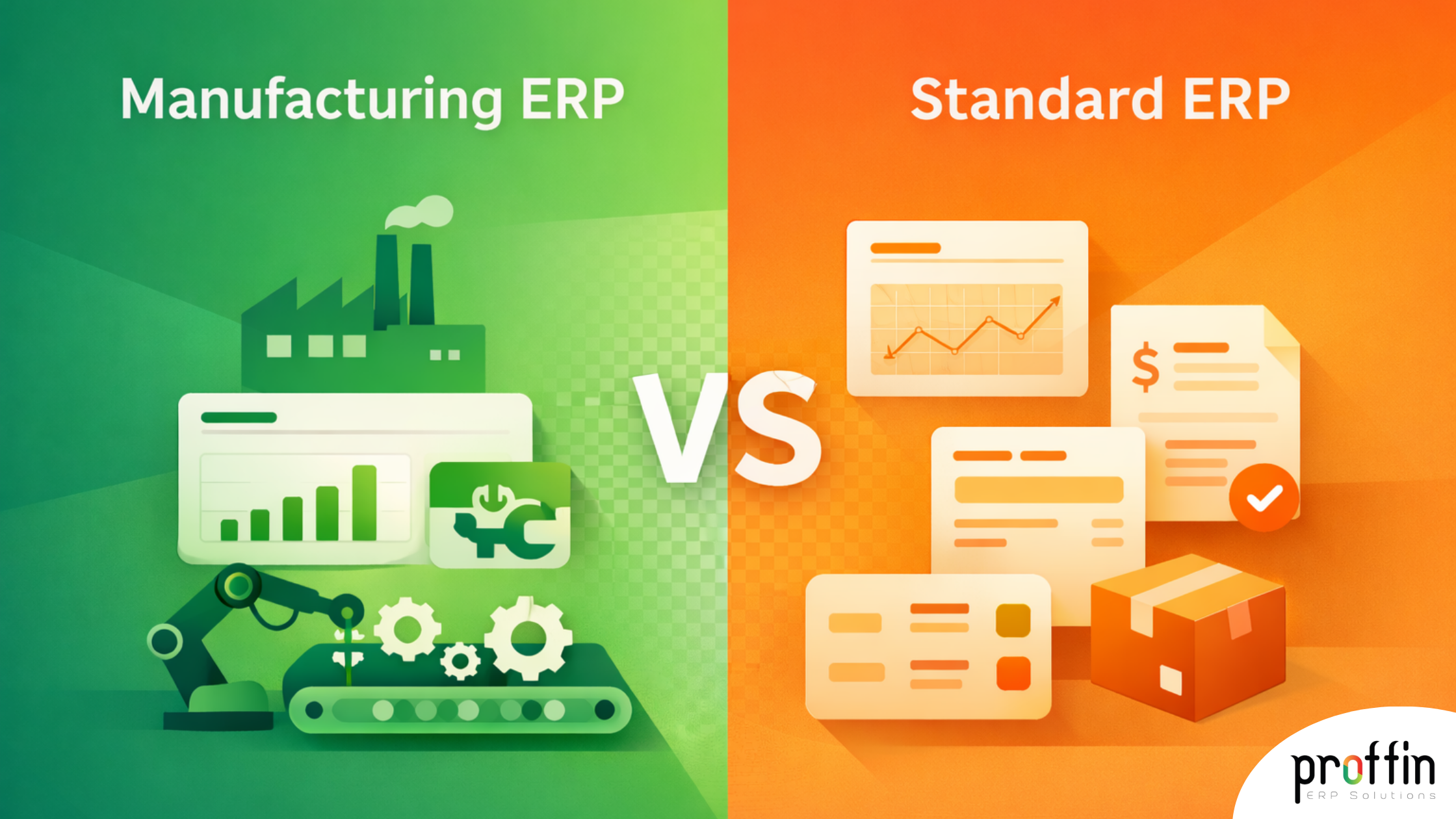
A manufacturing ERP is software designed specifically for how factories actually work. It helps manage the fast-moving, hands-on environment of a production floor, where timing, materials, and machines all have to work together. At its core, this type of ERP tracks the full journey of a product—from raw materials coming in to finished goods ready for delivery.
Unlike general business software, a manufacturing ERP includes features that factories truly need, such as detailed bills of materials, production capacity planning, and live scheduling on the shop floor. For businesses in KSA, using a manufacturing-focused ERP makes it easier to see exactly what’s happening at every stage of production. It also ensures that labor time and material usage are accurately recorded, so the final product cost reflects the real effort and resources involved.
Standard ERP
A standard ERP is a general-purpose business software designed to handle the everyday operations that most companies need, regardless of their industry. Instead of focusing deeply on production or manufacturing processes, it helps manage the overall administrative side of a business. In simple terms, a standard ERP takes care of things like accounting, billing, inventory tracking, human resources, payroll, sales, and basic reporting. It brings all these functions into one system so teams don’t have to rely on multiple tools or spreadsheets.
Key Differences Between Them
The main difference between a standard ERP and a manufacturing ERP comes down to how they handle inventory and costs. A standard ERP looks at inventory in a very simple way. Items are bought, stored in a warehouse, and then sold. That’s it. This works fine for trading or service businesses, but it doesn’t reflect what really happens inside a factory. A manufacturing ERP sees inventory as something that constantly changes. Raw materials are used up, parts are assembled, and sometimes waste or scrap is produced along the way. The system tracks all of this as it happens. It also goes beyond basic buying and selling prices. Instead of showing just a rough profit margin, a manufacturing ERP calculates the true cost of making a product—including electricity, machine usage, labor, and even equipment wear and tear. This gives businesses a much clearer and more realistic picture of how profitable their factory operations really are.
Benefits of Implementation
Both types of ERP systems have their own strengths, depending on what a business wants to achieve. Manufacturing ERPs are built to improve how factories run. They help spot delays on the production line, reduce material waste, and make sure work is planned based on real machine availability not guesswork. This leads to smoother production and better use of resources. On the other hand, standard ERP systems focus more on business administration. They make tasks like financial closing faster, automate payroll, and offer CRM tools that help businesses manage customers and improve long-term relationships. That said, both systems share some important benefits. They connect different departments so everyone works with the same data, support full ZATCA-compliant e-invoicing, and are cloud-based—meaning managers can track operations anytime, anywhere, right from their mobile devices.
Growth with Proffin
Selecting a digital partner requires an entity that understands the regional regulatory landscape and specific industry pain points. Proffin delivers a high-performance, cloud-native ecosystem designed to bridge the gap between complex industrial requirements and streamlined administrative control.
The Proffin Competitive Advantage:
- Industry-Specific Modules: Our platform provides a dedicated "Production Module" with advanced ingredient settings for manufacturers alongside a powerful "Finance Manager" for commercial entities.
- Native ZATCA Compliance: Proffin is engineered to be 100% ZATCA-compliant, ensuring that e-invoicing and tax reporting are automated and secure.
- Scalable Architecture: We offer an enterprise-grade framework that is accessible to SMEs, allowing your technology to evolve in tandem with your business growth.
- Real-Time Mobility: Our mobile-first interface ensures that stock levels, production status, and financial statements are accessible on any device at any time.
Modernize your operations with a system engineered for precision and scale. Proffin provides the technical foundation necessary to navigate the complexities of today’s industrial market.